Riding instructor in Bratislava and the surrounding area: individual training
Individual riding lessons in Bratislava and the surrounding area: work with rider and horse, correction of problem horses, training for children and adults.
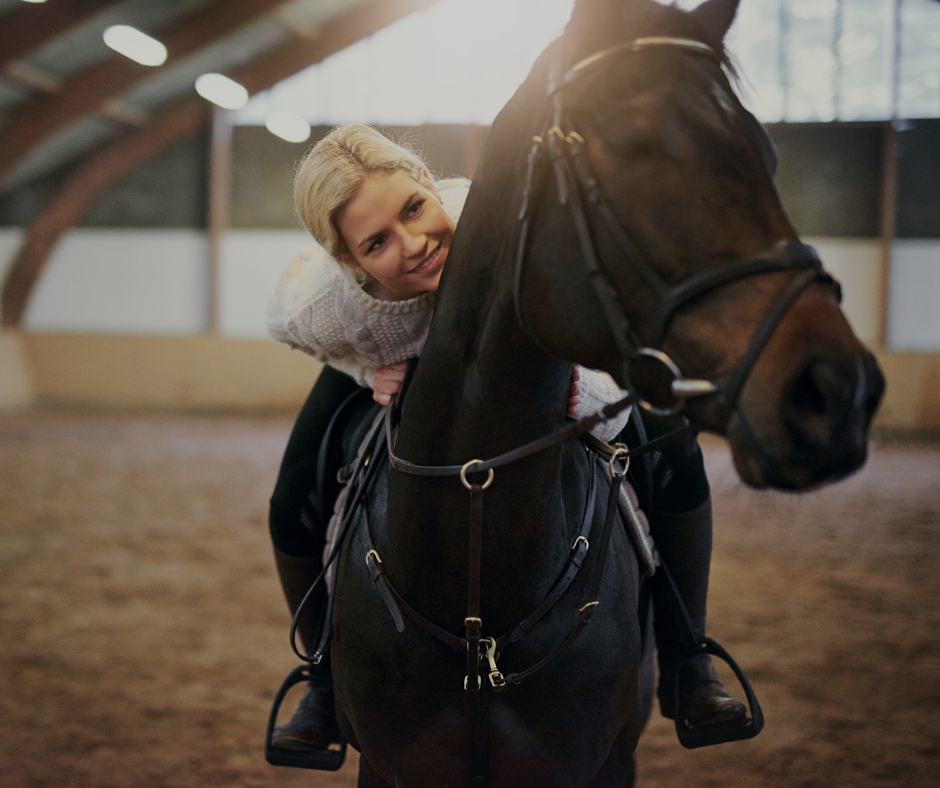
Are you looking for a riding instructor in Bratislava or the surrounding area? Whether you are just starting out, want to move up to the next level or are dealing with a horse that “won’t cooperate”, the right trainer can change not only your riding but also your relationship with your horse. In this article I explain how my training sessions work, who they are for and which options you can choose from.
Who will be training you
I have been involved in equestrian sport for more than 15 years. I gained experience not only in Slovakia but also abroad: I worked in Norway, where I focused on show jumping and training horses in a professional environment. It was my experience abroad that taught me that top-level riding is not built on force or drilling, but on precise attention to detail, consistency and respect for the horse.
Today I pass this experience on to my riders in Bratislava and the surrounding area: from children who are getting on a horse for the first time to horse owners dealing with complex corrections. You can read more about me and my approach on the About us page.
Why an individual approach makes the difference
Every horse is different, and so is every rider. That is why I do not work to a template. At the start of a collaboration I always look at two things: what the horse needs and what suits the rider. Sometimes the problem is in the saddle, sometimes on the ground, sometimes in the communication between the pair. I lead the session according to what the pair actually needs, not according to what is “planned for this week”.
I do not approach horses with force, but kindly and consistently. The same applies to riders: in training I am strict, I notice every detail and I let nothing slide, but the goal is always progress, trust and the joy of riding. The results of this approach are best described by the clients themselves: horses that spooked and kicked out calmed down after a few sessions, and riders who were afraid look forward to their lessons again.
My approach: kind, consistent and without templates
My training philosophy rests on three pillars:
- A horse is not a machine. Every “problem” behaviour has a cause: fear, pain, a bad experience or unclear communication. That is why I never approach horses with force. I look for the cause and work with it kindly but consistently. A horse that cooperates out of fear is not a trained horse. It is a ticking time bomb.
- Detail decides. In training I notice every movement and let nothing slide, not to make the session tough, but because small inaccuracies today become big problems in six months. With me, strictness in training goes hand in hand with a good atmosphere; riders look forward to sessions rather than dreading them.
- No templates. There is no universal method for everyone. I perceive what the horse needs and what suits the rider, and I lead every single session accordingly. What works for one pair can harm another.
Fear in the saddle: the most common problem that is rarely talked about
Fear is completely natural in riding and affects far more riders than you would expect. The most common situations I deal with in my clients:
Fear after a fall
Falling is part of riding, but sometimes it leaves a block that does not go away on its own. The solution is not to “grit your teeth and get back on”, but to step back into situations where you feel safe and rebuild your confidence gradually from there. You set the pace, not the trainer.
Fear of your own horse
When a horse kicks out, spooks or is unpredictable, the rider naturally starts to be afraid, and the horse immediately senses the fear, which closes the circle. In these cases I work with both at once: I correct the horse and give the rider the tools to read and handle the situations. This is exactly how we managed to change a horse that its young rider was afraid to ride. Today they are best friends again.
Fear and insecurity in children
Children often cannot name their fear. It shows up as “I don’t feel like it” or as making up excuses. I never push a child into anything. Safety and trust are the foundation on which performance can be built; it does not work the other way round.
Nerves before competitions
Even experienced riders can perform worse at competitions than at home. Preparation that simulates competition situations, a clear routine and working with expectations all help. This is also part of training.
If you recognise yourself in any of these situations, you are not alone and it is no reason to give up riding. It is a reason to train differently.
How the training sessions work
1. Introductory session and assessment
The first meeting is always about getting to know each other. I look at how the horse works on the ground and under saddle, how the rider sits, how the pair communicates and where the biggest room for improvement lies. We talk about your goals: whether you want to ride for pleasure, prepare for competitions or “just” solve a specific problem.
2. An individual training plan
Based on the introductory session I propose a plan: what we will work on, in what order and how often to train so that progress is visible. The plan is not dogma. I adjust it continuously to how the horse and the rider are progressing.
3. Regular sessions and feedback
A session usually lasts 45–60 minutes. During it you get immediate feedback: I correct your seat, aids, hands and timing. After the session we sum up what went well and what you should pay attention to before the next meeting. With children I like to involve the parents too, so they know how their child is progressing.
What I offer: training options
Individual riding lessons
One-to-one sessions for children and adults, from beginners to advanced riders. We focus on a correct seat, balance, aids and communication with the horse, the fundamentals without which nothing else can be built.
Training for children and young people
Children need a different approach than adults: more patience, playfulness and a sense of safety. But also consistency, so that they build the right habits from the start. Parents particularly appreciate that their children look forward to lessons and that progress is visible after just a few months.
Correction and work with problem horses
Does your horse spook, kick out, refuse to cooperate or has it lost trust? This is the area where I can help the most. I work with the cause of the behaviour, not just the symptom. Always kindly and consistently, never with force. The goal is a horse that is calm, cooperative and whose rider enjoys it again.
Jumping preparation and show jumping training
Thanks to my experience in show jumping in Norway, I also offer systematic jumping preparation for beginners and intermediate riders: from work over cavaletti and gymnastic grids through building a correct jumping position to preparing the pair for competitions. We only jump as much as both horse and rider can handle. Technique comes before height.
Groundwork and lunging
A large share of problems under saddle start on the ground. Groundwork builds respect, trust and relaxation in the horse and is also suitable for owners who want to work with their horse themselves between sessions.
Training at your stable: Bratislava and the surrounding area
You do not have to transport your horse anywhere. I come to clients at their stables in Bratislava and the surrounding area, for example around Senec, Pezinok, Modra, Stupava, Malacky, Dunajská Lužná or Šamorín. The horse works in an environment it knows, which is a huge advantage, especially for corrections.
Consultations and advice
Not sure whether the problem lies with the horse, with you or with the tack? Considering buying a horse and want an independent opinion? I also offer one-off consultations, after which you leave with a concrete recommendation, not general advice.
Who the training is for
- Beginners who want to build the right foundations from the very first lesson.
- Leisure riders who want to feel more confident and safer in the saddle.
- Advanced riders who want to work systematically on details and keep improving.
- Horse owners who are dealing with problem behaviour or want to develop their horse.
- Children and young people for whom riding is a sport, a joy and a school of responsibility.
How often to train and what to expect
With regular training 1–2 times a week, progress is usually visible within a few weeks to months, in both rider and horse. With problem horses, the length of the collaboration depends on the cause and depth of the problem, but the first changes in the horse’s behaviour can often be seen after the first sessions.
Honesty matters, though: riding is not a sport of quick shortcuts. Lasting results come from regularity, consistency and cooperation between trainer, rider and horse.
How much the sessions cost
The price depends on the type of session (individual lesson, horse correction, groundwork, consultation) and on whether I travel to your stable. I will prepare a specific quote after a short, non-binding conversation about what you are dealing with.
Frequently asked questions
Do you also train complete beginners?
Yes. It is with beginners that building the right habits from the first lesson matters most. Bad habits are much harder to get rid of later.
From what age do you take children?
Age is individual. More important are the child’s physical fitness, interest and a suitable horse. The best thing is to get in touch and we will discuss it together.
Do I need my own horse?
Not necessarily. Get in touch and we will find a solution for your situation, whether you have your own horse, a horse on loan or lease, or are just starting out.
Do you also travel outside Bratislava?
Yes, I work in Bratislava and the wider surrounding area. For longer distances we agree individually.
My horse spooks and kicks out. Can anything be done about it?
In most cases, yes. Such behaviour almost always has a cause: fear, pain, a bad experience or unclear communication. At the introductory session I assess the horse and propose a correction plan.
I am afraid to get back on a horse after a fall. Can you help me?
Yes, and you are not alone: many riders deal with fear after a fall. We go back together to situations in which you feel safe and rebuild your confidence gradually, at your pace. No pressure and no heroics.
Do you also do show jumping?
Yes, I also did show jumping in Norway. I adapt jumping preparation to the level of the pair: from cavaletti and gymnastic grids to preparation for competitions.
How do I book a first session?
Just send an email to romana@equilabz.com or call +421 907 197 006. We will arrange an introductory meeting to discuss your goals and current situation. You can also contact me via the contact form.
Let’s start together
Whether you want to improve your riding, find a trainer for your child or restore trust in a horse that “won’t cooperate”, the first step is simple. Write to me, tell me what you are dealing with and I will propose a concrete plan.
Contact: romana@equilabz.com · +421 907 197 006
Sources
- International Society for Equitation Science (ISES): ISES Training Principles, equitationscience.com
- Dyson S., Pollard D., Animals (MDPI), 2023: Application of the Ridden Horse Pain Ethogram to 150 Horses with Musculoskeletal Pain before and after Diagnostic Anaesthesia, pmc.ncbi.nlm.nih.gov
- Keeling L., Jonare L., Lanneborn L., The Veterinary Journal, 2009 (SLU): Investigating horse-human interactions: The effect of a nervous human, research.slu.se
Dealing with a similar topic in your brand?
The first consultation is non-binding and concrete. Book 30 minutes or write to us at romana@equilabz.com.